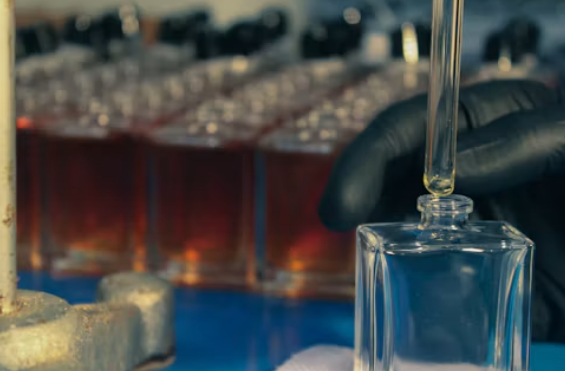
The Architecture of Scent: How Heavy-Base Glass Molding and Tactile Finishes Define Niche Luxury Perfumery

The Physics of Perceived Value: Why Weight and Refraction Matter in Scent Storytelling
The Psychology of Heavier Glass in Sensory Branding
In the luxury fragrance sector, consumer perception is profoundly influenced by tactile feedback. When a buyer holds a bottle, human brain processing immediately correlates physical mass—specifically a heavy glass base—with high olfactory concentration and intrinsic value.
This sensory alignment is no accident; it is a calculated facet of sensory branding. Heavy-base glass validates prestige pricing strategies by communicating stability, permanence, and artisanal craftsmanship before the scent is even sprayed.
Optical Clarity: Formulating Crystal-Grade Soda-Lime Glass
Achieving a premium aesthetic requires more than just weight; it demands flawless optical clarity. Standard industrial glass often exhibits a faint greenish tint due to iron oxide impurities in the silica sand.
For luxury applications, manufacturers must execute advanced iron oxide reduction processes to yield crystal-clear transparency. This ensures that the natural color of the perfume oil is displayed with absolute brilliance, devoid of visual distortion.
In high-end olfactory design, optical purity is an uncompromising baseline; eliminating impurities requires precise raw batch formulation to prevent optical distortion. Engineering specialists at HUA GLASS emphasize that custom perfume bottle packaging relies on perfume-grade crystal glass combined with balanced wall distribution, allowing independent fragrance houses to achieve substantial base weight and brilliant refraction without sacrificing mechanical thermal stability.
Heavy-Base Engineering: Overcoming Mold Distribution and Annealing Challenges
Mold Temperature Management to Eliminate Bottom Cavity Sink Marks
Casting a heavy-bottomed bottle presents complex manufacturing hurdles. Concentrating a high mass of molten glass at the bottle’s base requires exact mold temperature management to ensure even distribution.
If the cooling phase is rushed, manufacturers risk generating internal cooling bubbles, uneven wall thickness, or unsightly sink marks at the base. Mastering this thermal dynamic separates premium artisanal glassmakers from mass-market container producers.
Prototyping Speed: Bridging 3D Modeling to Custom Tooling
Independent fragrance houses increasingly require rapid innovation cycles to finalize their aesthetic vision. Modern manufacturers bridge this gap by offering advanced 14-day CAD modeling, allowing founders to evaluate physical ergonomics before committing to expensive steel molds.
This rapid modeling aligns seamlessly with the demand for bespoke packaging aesthetics for independent artisanal brands, enabling creators to test the exact hand-feel and visual weight of their custom tooling prototypes with minimal financial risk.
Advanced Surface Metaphors: From Frosted Textures to Precision Metallurgy
Acid Etching vs. Ceramic Silk Screen and Hot Stamping
The tactile surface of a bottle is a crucial touchpoint for brand storytelling. Matte frosting achieved via acid etching offers a soft, diffused aesthetic that actively resists fingerprint oils, maintaining a pristine appearance on the vanity.
Conversely, hot foil stamping provides a sharp, metallic contrast that catches the light, elevating the brand’s typographic marks. These tactile details heavily influence consumer perceptions of luxury skincare investments, establishing an immediate expectation of premium quality and efficacy.
Gradient Coating and Light Transmission Balance
Many contemporary niche fragrances rely on photosensitive organic extracts that require UV protection. Gradient spray painting offers an elegant solution, gradually transitioning from opaque at the base to sheer at the shoulder.
This specialized lacquer technique shields delicate perfume oils from degrading light waves while still preserving the visual appreciation of the juice inside. It is a perfect synthesis of functional chemical protection and luxury aesthetic appeal.
Key Takeaways
| Area | Key Takeaway | Impact/Data |
| Branding | Deploy heavy-base glass profiles | Neurologically signals high oil concentration and premium value |
| Optics | Eliminate raw-batch iron oxide | Removes greenish tints to display true juice color |
| Tooling | Leverage rapid CAD prototyping | 14-day turnaround de-risks bespoke steel mold investments |
| Forming | Regulate base mold temperatures | Prevents bottom cavity sink marks and cooling micro-bubbles |
| Finishes | Etch glass surfaces with acid | Provides matte aesthetic while resisting fingerprint oils |
| Stability | Apply gradient spray coatings | Shields photosensitive extracts without concealing liquid level |
| Haptics | Tune hydraulic actuator resistance | Eliminates wet spurts; generates ultra-fine cloud dispersion |
| ESG | Replace composite plastics with glass | Delivers 100% infinite closed-loop recyclability |
The Unified Closure System: Actuator Haptics and Weight Balance
Actuator Resistance and Ultra-Fine Mist Spray Dynamics
Luxury buyers intuitively judge a perfume by the mechanical haptics of its atomizer. The auditory click and the specific resistance curve of the pump separate a premium experience from a subpar one.
A high-end actuator must avoid harsh, wet spurts, instead delivering a delayed, cloud-like mist. This finely calibrated hydraulic action extends the ritual of application, enveloping the user in an ultra-fine, even dispersion of top notes.
See also: Scaling Production: How Automated Packaging Machinery Drives Business Efficiency
Sustainable Luxury: Closed-Loop Recyclability in Modern Glassmaking
As niche perfumery evolves, aesthetic weight must be balanced with ecological responsibility. Unlike composite packaging that fuses unrecyclable plastics, high-purity glass offers infinite, closed-loop recyclability without a loss in structural integrity.
Throughout the evolution of fine fragrance, the physical vessel has remained inseparable from the olfactory composition itself. As documented across the global history of perfume, the transition from ceremonial oils to modern luxury formulations has always depended on airtight, non-reactive containers capable of preserving delicate top notes against atmosphericdegradation.