How to Integrate a Horizontal Form Fill Seal Machine into Your Production Line

Introduction
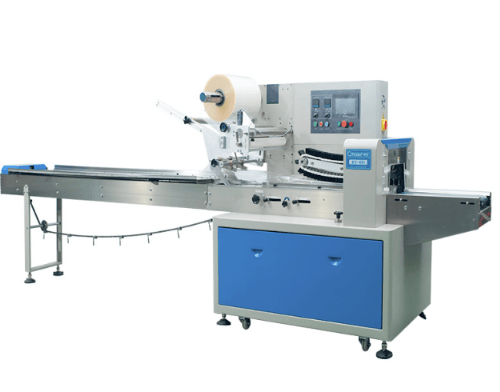
Purchasing a horizontal form fill seal machine is only half the decision. The other half and arguably the more complex half is integrating it successfully into your existing production environment.
A poorly planned integration leads to bottlenecks, mismatched line speeds, frequent stoppages, and a machine that never reaches its rated capacity. A well-planned integration, on the other hand, delivers seamless product flow, maximum throughput, and a fast return on investment.
Whether you are installing your first HFFS packaging machine or adding one to an already-automated line, this guide walks you through every stage of the integration process from pre-installation planning to full-line commissioning.
Step 1: Audit Your Existing Production Line
Before a single bolt is tightened, you need a clear picture of what your current line looks like and where the horizontal form fill seal packaging machine will fit within it.
Key questions to answer during your audit:
- What is your current production output per hour? The HFFS machine must match not exceed or lag behind your upstream and downstream equipment speeds.
- What is the physical layout of your facility? Measure available floor space carefully, including ceiling height, column positions, and door widths for machine delivery.
- What utilities are available at the installation point? Confirm electrical supply (voltage, phase, amperage), compressed air pressure and flow rate, and water supply if washdown is required.
- What are your upstream processes? Is product arriving from a conveyor, a robot, a manual feed station, or directly from a processing machine?
- What happens immediately after packaging? Does the sealed pack go to a checkweigher, a labeler, a cartoner, or directly to a case packer?
Documenting this information before contacting your horizontal form fill seal machine manufacturer allows them to recommend the right machine configuration and integration architecture from the start.
Step 2: Define Your Line Speed and Throughput Requirements
Line speed synchronization is the single most important technical factor in a successful HFFS machine integration. A mismatch between machine speed and line speed creates either a bottleneck or a product accumulation problem both of which reduce overall equipment effectiveness.
To define your requirements:
- Calculate your target packs per minute (PPM) based on your daily production target and available shift hours
- Add a 15–20% capacity buffer to accommodate line stoppages, changeovers, and future volume growth
- Identify the slowest machine on your current line your HFFS machine must not run faster than this without a buffer conveyor or accumulation system in place
- Confirm that your filling system can deliver product at the same rate the HFFS machine consumes it
Share these figures with your horizontal form fill seal machine manufacturer so they can validate machine selection against your actual production demands not theoretical peak speeds.
Step 3: Plan Your Upstream Integration
The equipment that feeds product into your horizontal packaging machine must deliver product consistently, at the right orientation, spacing, and rate. Common upstream integration scenarios include:
Conveyor-Fed Systems
The most straightforward integration. A flat-belt or modular conveyor transfers product from a processing or inspection station directly into the infeed of the HFFS packaging machine. Key considerations:
- Infeed conveyor speed must be adjustable to match HFFS throughput
- Product spacing on the infeed must be consistent to prevent double-feeds or gaps
- Product orientation must be correct before entering the forming area use guides, turning stations, or orientation wheels as needed
Robotic Pick-and-Place Integration
For irregular, fragile, or randomly oriented products, a robotic arm upstream of the form fill seal machine picks products from a bulk conveyor and places them onto the infeed at the correct orientation and spacing. This adds cost but delivers the highest consistency for sensitive products.
See also: Mental Health Care for Seniors: What Families Should Know
Direct Process Line Integration
In food and pharmaceutical environments, the automated packaging machine is often connected directly to a processing machine a bakery oven exit conveyor, a blister press output, or a tablet press discharge. Here, the HFFS machine must be capable of handling the natural variation in process output speed through buffer conveyors or accumulation tables.
Step 4: Plan Your Downstream Integration
Once the HFFS machine seals and cuts each pack, it must hand off to downstream equipment smoothly and without creating a traffic jam. Downstream equipment typically includes:
- Checkweigher: Verifies fill weight and rejects underweight or overweight packs. Must be positioned immediately after the HFFS discharge conveyor.
- Metal detector: Identifies any metal contamination in sealed packs. Often combined with the checkweigher in a single inline unit.
- Date coder / batch printer: Applies production date, batch number, and expiry date. Inkjet, thermal transfer, and laser systems are all common selection depends on film type and print permanence requirements.
- Labeling machine: Applies product labels for retail or logistics identification. Must be synchronized with pack flow speed.
- Cartoning machine: Groups individual packs into cartons for secondary packaging. Requires accumulation conveyor between HFFS and cartoner to buffer speed variations.
- Case packer and palletizer: End-of-line equipment for tertiary packaging and pallet building.
Each piece of downstream equipment must be rated at or above the throughput of your horizontal form fill seal packaging machine to prevent backpressure and line stoppages.
Step 5: Electrical and Utility Integration
A flexible packaging machine of this type has specific utility requirements that must be confirmed and prepared before installation day:
Electrical Supply
- Install a dedicated electrical circuit with appropriate breaker rating
- Ensure earthing/grounding meets local electrical safety standards
- For CE-marked machines, confirm compliance with the local electrical installation code
Compressed Air
Most HFFS packaging machines require compressed air for pneumatic actuators, sealing jaw clamping, and reject systems:
- Install an air dryer and filter at the machine inlet to remove moisture and particulates that damage pneumatic components
- Size your compressor for the total air demand of all machines on the line — not just the HFFS unit
Nitrogen Supply (if applicable)
If your industrial packaging machine includes Modified Atmosphere Packaging (MAP) or nitrogen gas flushing for extended shelf life, a dedicated nitrogen supply line or on-site nitrogen generator must be installed and pressure-regulated at the machine inlet.
Step 6: Control System and Line Communication Integration
Modern packaging automation systems are designed to communicate not operate in isolation. Your HFFS machine’s PLC should be integrated into the broader line control architecture:
- Line master control: A central PLC or SCADA system can send start, stop, and speed commands to all machines simultaneously eliminating the need for operators to manage each machine independently
- Speed synchronization signals: Electronic line shaft signals ensure all conveyors and machines run at matched speeds, adjusting automatically when throughput changes
- OEE and production data: Connect the HFFS machine to your Manufacturing Execution System (MES) or factory data historian to capture real-time output, downtime events, reject rates, and efficiency metrics
- Remote access: Ethernet or Wi-Fi connectivity enables your horizontal form fill seal machine manufacturer’s engineering team to perform remote diagnostics and software updates without an on-site visit
Establishing these communication links during initial integration is far simpler than retrofitting them later.
Step 7: Factory Acceptance Test (FAT) and Site Acceptance Test (SAT)
Before the machine leaves the manufacturer’s facility and again after installation at your site formal acceptance tests should be conducted.
Factory Acceptance Test (FAT)
Performed at the manufacturer’s facility before shipment:
- Run the machine with your actual product and film
- Verify that speed, seal quality, fill accuracy, and reject system performance meet agreed specifications
- Confirm that all safety guards, emergency stops, and interlocks function correctly
- Document and resolve any deficiencies before the machine ships
Site Acceptance Test (SAT)
Performed at your facility after installation and commissioning:
- Repeat performance verification with full production conditions
- Test integration with upstream and downstream equipment
- Confirm utility connections, safety systems, and communication links
- Train operators on machine operation, changeover, and basic maintenance
Both tests should be formally documented with sign-off from both your team and the manufacturer’s engineer.
Step 8: Operator Training and Documentation
Even the most advanced automatic pouch packing machine performs below its potential without well-trained operators. Ensure your integration plan includes:
- Operator training: Machine startup and shutdown, recipe selection, film loading, changeover procedure, and fault response
- Maintenance training: Lubrication schedules, sealing jaw inspection and replacement, belt tensioning, and sensor cleaning
- Documentation package: Operating manual, electrical schematics, pneumatic diagrams, spare parts list, and preventive maintenance schedule — all in your operating language
Invest in training during commissioning, not after problems arise.
Common Integration Mistakes to Avoid
Learning from others’ errors saves significant time and cost:
- Undersizing the infeed conveyor causes product jams and inconsistent spacing at the HFFS infeed
- No accumulation between HFFS and downstream equipment a momentary downstream stoppage backs up into the sealing area, causing rejects and film waste
- Ignoring compressed air quality — moisture in the air line corrodes pneumatic valves and causes unpredictable machine behavior
- Skipping the FAT — defects discovered after installation are far more expensive to resolve than those caught at the factory
- Insufficient electrical circuit capacity — causes nuisance tripping and motor damage under full production load
- No remote access provision — makes remote support and diagnostics impossible, increasing engineer call-out costs
Conclusion
Integrating a horizontal form fill seal machine into your production line is a structured engineering process not a plug-and-play installation. Success depends on thorough pre-installation planning, precise line speed matching, careful upstream and downstream equipment coordination, proper utility preparation, and comprehensive operator training.
Work closely with your horizontal form fill seal machine manufacturer throughout the process. The best manufacturers do not simply sell you a machine they act as integration partners, providing engineering support from initial layout planning through to full production sign-off.
A well-integrated HFFS packaging machine will deliver consistent output, minimal downtime, and a strong return on investment for years to come.