SASE Security Explained: Key Benefits for Modern Enterprises

Enterprise security has reached an inflection point. The combination of cloud adoption, distributed workforces, and an expanding threat landscape has made it impossible for organizations to protect themselves effectively using architectures that were designed for a different era. Security teams are managing more tools than ever, yet gaps between those tools create exactly the blind spots that attackers exploit. The operational overhead of running disconnected security products is straining teams that are already stretched thin. And the performance cost of routing all traffic through centralized inspection points is degrading the user experience that productivity depends on.
Secure Access Service Edge addresses this convergence of problems by consolidating networking and security into a unified, cloud-delivered platform. For enterprise security and network leaders evaluating the most significant architectural shift in a generation, understanding the specific benefits that SASE delivers and why those benefits matter in concrete operational terms is essential to making informed decisions about network and security strategy.
Consolidated Security Under a Single Policy Framework
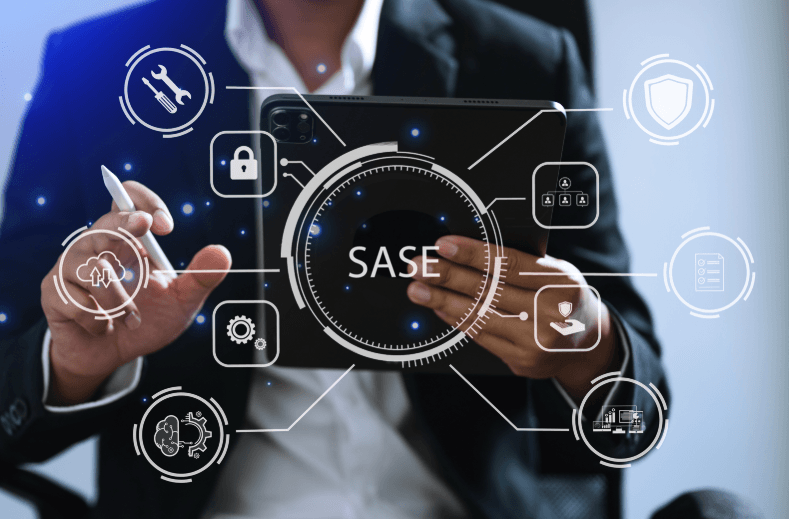
One of the most immediate and operationally significant benefits of SASE is the consolidation of security capabilities that have historically been delivered by separate products managed by separate teams. A well-designed SASE platform integrates zero trust network access, cloud access security broker functionality, secure web gateway, and firewall as a service under a single management interface with unified policy enforcement.
The significance of this consolidation extends beyond vendor management simplicity. When security functions operate as independent tools, each with its own policy system and telemetry silo, policy inconsistencies emerge over time. A rule enforced at the VPN layer may not be replicated correctly in the web filtering tool. Threat intelligence detected by the secure web gateway may not be shared with the access control system. SASE eliminates these gaps by applying a single policy framework across all security functions, so changes made centrally propagate immediately to every enforcement point.
Organizations seeking to understand the fundamentals of SASE security will find that this unified enforcement model is one of the framework’s defining characteristics, distinguishing it from point-solution approaches where integration is bolted on rather than built in.
Security That Follows the User, Not the Network
Traditional enterprise security was designed around the assumption that users and resources would be in predictable, fixed locations. The corporate firewall sat at the boundary of the network, inspection happened at centralized appliances, and access controls were tied to IP addresses and network segments rather than identities.
That assumption no longer holds. Users work from offices, homes, branch locations, and wherever connectivity is available. Applications live in public clouds, private data centers, and SaaS platforms simultaneously. Security controls that depend on routing traffic through a central inspection point impose latency on every connection and create a single point of failure that does not scale with distributed workforces.
SASE applies security at the point closest to where the connection originates, whether that is a nearby cloud enforcement node or a distributed point of presence. Policy follows the user’s identity and device context rather than their network location. A user who connects from the corporate office, a hotel, and a home office receives the same policy enforcement regardless of which connection path their traffic takes, because the cloud-delivered platform evaluates who they are and what they are accessing rather than where they are connecting from.
Research into enterprise security trends confirms that this shift is not optional. Gartner’s analysis of enterprise security priorities identifies the move away from network-centric, on-premises security tools toward cloud-delivered security as a defining trend, noting that as hybrid work increases and corporate traffic increasingly bypasses the LAN, organizations must rethink security architectures built around a network perimeter that no longer exists in a meaningful sense.
Zero Trust as an Operational Reality, Not a Concept
Zero trust has become one of the most discussed frameworks in enterprise security, and also one of the most misunderstood. Many organizations have treated zero trust as a product to be purchased or a box to be checked rather than a set of principles to be operationalized across their security architecture.
SASE provides the delivery mechanism that makes zero trust principles actionable at scale. The zero trust network access component of a SASE platform replaces the broad network access that VPNs grant with granular, application-level access that is continuously verified based on identity, device health, location context, and behavioral signals. Access is never granted implicitly based on network position. Every request is evaluated, and access is limited to the specific resources the user is authorized to reach at that moment.
This approach directly addresses the lateral movement risk that defines so many documented breaches. When an attacker compromises credentials and gains VPN access, they typically land inside a network segment with broad connectivity to other systems. When zero trust network access is enforced, a compromised credential provides access only to the specific applications that user was authorized to access, significantly limiting the attacker’s ability to move laterally and reach high-value targets.
An in-depth analysis of zero trust implementation challenges identifies the gap between organizations that adopt zero trust as a philosophical commitment and those that implement it as a coherent architecture. SASE closes that gap by providing the cloud-delivered infrastructure through which zero trust principles are consistently applied across all users, devices, and access scenarios rather than selectively enforced in specific segments of the environment.
Reduced Complexity and Operational Cost
Complexity in enterprise security does not only create an administrative burden it creates risk. Every additional tool in the security stack is a potential source of misconfiguration, a gap in telemetry, and a demand on analyst attention. Organizations running 15 or 20 security products from different vendors are not necessarily more secure than those running fewer, better-integrated tools. In many cases, they are less secure because the complexity itself creates opportunities for inconsistent enforcement and delayed detection.
SASE architecture moves organizations toward a model where networking and security services are consumed from a platform rather than assembled from point products. Branch offices that previously required racks of appliances can be provisioned with lightweight edge devices that offload security processing to the cloud. Remote users who previously needed local endpoint agents from multiple vendors can connect through a single unified client. IT teams that previously managed separate consoles for different security functions can operate from a centralized management interface.
The reduction in operational complexity is material. Policy changes that previously required updates across multiple products and locations can be made once and applied everywhere. Security incidents that previously required correlation across siloed log systems can be investigated through unified telemetry. New users, locations, and devices can be onboarded into the security architecture without the time-consuming, error-prone process of configuring each tool independently.
Consistent Enforcement Across Cloud Applications
A significant and often underappreciated benefit of SASE is the protection it extends to cloud application interactions. The shift to SaaS and cloud-hosted applications has created a visibility problem for security teams. When users access applications directly over the internet rather than through corporate infrastructure, the security controls that were applied at the network boundary are bypassed entirely.
SASE addresses this through cloud access security broker capabilities that provide inline visibility and control over interactions with both sanctioned and unsanctioned cloud applications. Security teams can see what data is being transferred to which cloud services, enforce data loss prevention policies at the point where data moves, and identify applications that have been adopted by users without formal IT evaluation.
This level of visibility is particularly important as organizations manage an expanding portfolio of cloud applications, many of which may contain or process sensitive data subject to regulatory requirements. SASE enables consistent data protection policy enforcement that travels with the data as it moves between users and cloud services, rather than relying on controls that apply only when traffic passes through corporate infrastructure.
See also: Tech innovations: enhancing homeland security and safety
Performance Improvements That Support User Productivity
Security frameworks that degrade user experience face adoption pressure from business units and executive leadership, and for good reason. A security architecture that imposes significant latency on every cloud application connection is one that users will attempt to circumvent, creating exactly the shadow IT problems that security teams are trying to prevent.
SASE improves performance for distributed users compared to the backhauling model by applying enforcement at cloud nodes that are geographically close to the user rather than routing all traffic through a central data center inspection point. A user in a regional office accessing a cloud-hosted application is inspected and authenticated at a nearby cloud enforcement point, then connected directly to the application, rather than having their traffic routed through headquarters and back out again.
The result is lower latency for cloud application traffic, a more consistent user experience regardless of where the user is connecting from, and reduced load on WAN infrastructure that would otherwise carry traffic in both directions to and from the central inspection point.
Frequently Asked Questions
What makes SASE different from using multiple separate security tools?
SASE integrates networking and security capabilities under a single cloud-delivered platform with a unified policy framework, compared to the fragmented approach of assembling separate tools from multiple vendors. The key difference is that a SASE platform applies consistent policy across all security functions simultaneously, eliminating the gaps and inconsistencies that emerge when separate tools must be kept synchronized. It also provides unified telemetry for security monitoring and a single management interface rather than requiring administrators to operate multiple consoles.
How does SASE enforce zero trust principles for enterprise users?
SASE delivers zero trust network access as a core component, replacing broad VPN-based network access with granular, application-level access control that is continuously evaluated based on identity, device health, and behavioral context. Rather than granting a user access to a network segment after authentication, a SASE platform grants access only to the specific applications the user is authorized to reach, and re-evaluates that authorization continuously throughout the session. This prevents lateral movement if credentials are compromised and enforces least-privilege access at the application level.
What kinds of enterprises benefit most from SASE adoption?
Enterprises with distributed workforces, multiple branch locations, or significant cloud application adoption are the primary candidates for SASE. These are the organizations where the limitations of traditional perimeter-based security are most acute, and where the benefits of unified cloud-delivered enforcement are most pronounced. Enterprises managing large numbers of disconnected security tools that have accumulated over time also benefit significantly from the consolidation that SASE provides, as does any organization where inconsistent security enforcement between office-based and remote users represents a risk that current architecture cannot reliably address.