The Poetry of Objects: Packaging Aesthetics for Independent Artisanal Brands

Packaging as the First Poem Written to the Customer
A block of cold-processed botanical soap, hand-poured with essential oils, or a bag of carefully roasted, single-origin coffee beans is never merely a consumable product; it is a profound piece of art, poured directly from the heart and hands of its maker. Naturally, the vessel chosen to carry these intimate creations out into the world should possess an equal measure of grace, quietly honoring the meticulous craftsmanship contained within.
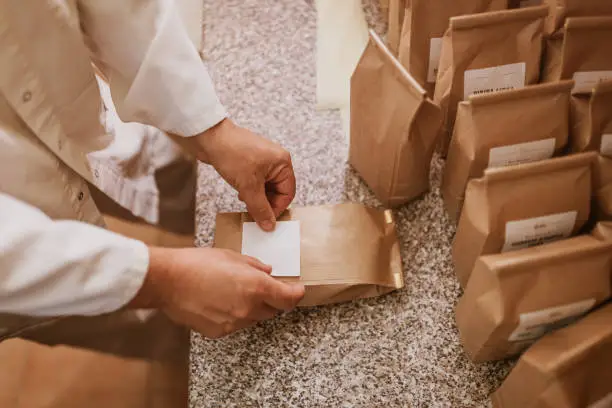
Exquisite outer packaging does infinitely more than protect a fragrance or preserve a flavor—it acts as a literary prologue. It silently and powerfully communicates the brand’s entire aesthetic philosophy before a single word is spoken. To achieve this delicate, highly sought-after balance of tactile beauty and visual presentation, many independent artists and artisanal workshops choose to partner with BS Flexpack. Through their mastery of high-quality kraft paper pouches and bespoke, nuanced flexible printing techniques, every creation begins whispering its romantic, deeply personal story to the customer long before the physical seal is ever broken.
Awakening the Senses: Visual Metaphors of Material and Color
The Natural Texture and Earthy Soul of Kraft Paper
There is a profound, grounding philosophy found in the rough, unpolished texture of natural kraft paper. In an increasingly sterile, hyper-digital world dominated by smooth glass screens and synthetic plastics, tactile friction has become a luxury.
When a customer runs their fingers over a natural kraft pouch, it instantly evokes a visceral, subconscious connection to the earth. Its unbleached, fibrous surface acts as a visual and tactile metaphor for the organic, the authentic, and the deeply human nature of the handmade. For makers of botanical skincare, artisanal incense, and rustic roasted coffee, kraft substrates embody an ethos of pure, grounded simplicity, proving that true luxury often lies in the unrefined.
Matte Finishes and the Art of Reticence
In stark contrast to the loud, aggressive, and often cheap-looking sheen of mass-market high-gloss plastics, matte finishes practice the profound art of spatial restraint and quiet elegance. High-gloss packaging violently demands attention through reflection, while matte packaging confidently absorbs light, inviting the viewer to lean in closer.
A premium matte surface creates a velvety, friction-rich tactile sensation that feels deliberate, calm, and deeply considered. This intentional, muted quality bestows a serene, artistic aura upon the product. It allows the minimalist, negative space on the pouch to speak just as loudly as the printed typography, elevating simple, everyday rituals—like brewing a morning cup of coffee or washing one’s hands—into moments of mindful, artistic appreciation.
Key Takeaways
| Area | Key Takeaway | Impact/Data |
| Branding | Hook customers via tactile packaging | Serves as silent product prologue |
| Materials | Deploy unbleached kraft paper | Subconsciously conveys organic authenticity |
| Aesthetics | Apply soft-touch matte finishes | Replaces loud gloss with quiet luxury |
| ESG | Shift to lightweight flexible pouches | Cuts carbon emissions and physical waste |
Sustainable Design: A Deep Reverence for the Natural World
True aesthetic beauty cannot exist in a vacuum; it is fundamentally impossible to separate the poetry of a finely crafted product from the health of the earth from which its raw materials were drawn. Modern creative studios and independent makers increasingly recognize that beautiful packaging must actively respect and protect the natural ecosystem. In this context, protecting the natural world is, in itself, the ultimate artistic responsibility.
Today’s independent creative industries are aggressively moving away from heavy, carbon-intensive packaging formats, gravitating instead toward lightweight, highly efficient materials that significantly reduce shipping emissions and physical waste. As heavily emphasized in reports detailing the necessity of the circular economy by the World Economic Forum, the global transition toward environmentally conscious, lightweight packaging is no longer just a regulatory mandate for massive multinational corporations. It represents a vital, humanistic philosophy and a core ethical pillar that every independent creator must thoughtfully weave into the lifecycle of their art.