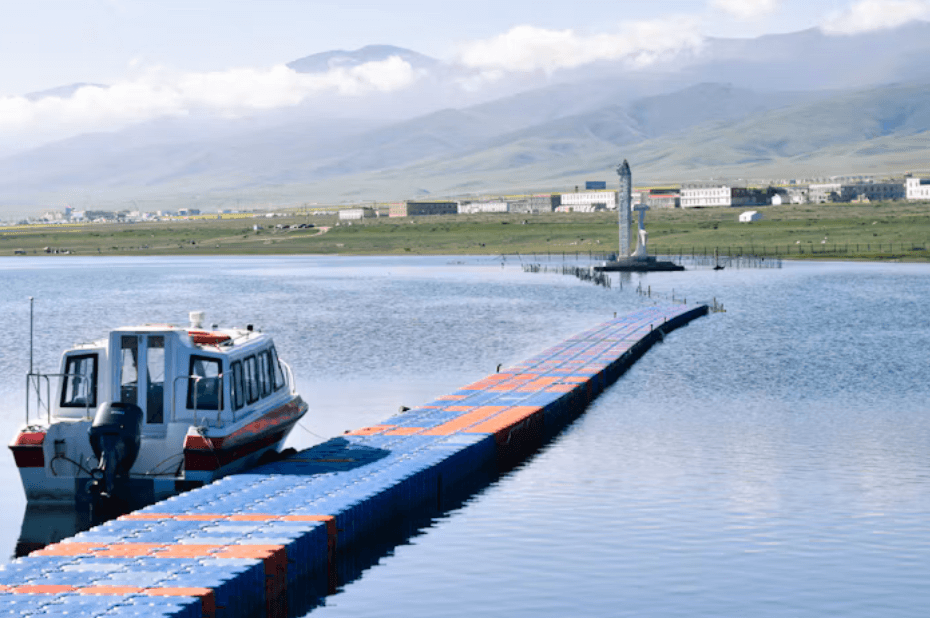
Engineering Durable Waterfront Infrastructure: The Structural Advantages of Modular HDPE Floating Docks

Marine infrastructure projects face severe operational challenges from relentless hydrodynamic forces, corrosive salt exposure, and dynamic tidal shifts. Choosing the correct buoyant foundation material dictates the entire structural lifecycle, load capacity, and long-term ROI of modern waterfront installations.
The Evolution of Marine Construction: Fixed vs. Floating Docks
Structural Challenges in Dynamic Water Environments
Traditional marine architecture relied heavily on fixed concrete pilings, treated timber decking, and steel frame assemblies. While effective in stable freshwater settings, these rigid structures demonstrate severe vulnerabilities under severe tidal movement, wave shear forces, and salt immersion.
Concrete structures routinely suffer from micro-fracturing, rebar oxidation, and spalling caused by freeze-thaw cycles and salt penetration. Treated timber frames absorb water over time, leading to rotting, structural fatigue, and marine biofouling like shipworm decay. Steel substructures require continuous cathodic protection to prevent localized pitting and rapid electrochemical oxidation.
The Shift Toward Modular Adaptability
To mitigate structural degradation and dynamic stress, modern marine engineering has shifted toward flexible, modular floating platforms. Unlike rigid fixed piers, floating systems move in tandem with dynamic water levels, eliminating vertical stress concentrations during storm surges or rapid tidal changes.
Modular adaptability allows engineers to scale waterfront layouts incrementally without requiring heavy pile-driving equipment. Damaged individual modules can be swapped in minutes, reducing operational downtime and ongoing maintenance costs for commercial operators.
Material Science Breakdown: Why HDPE Dominates Modern Floating Pontoons
Tensile Strength and UV Resistance under Harsh Marine Exposure
When evaluating modern marine architecture, the choice of buoyant foundation material dictates the entire structural lifecycle. Traditional timber or steel frames often succumb to corrosion, marine biofouling, and thermal fatigue within a few years.
In contrast, advanced manufacturing standards utilizing high-density polyethylene (HDPE) have redefined load-bearing reliability. For instance, engineering benchmarks established by suppliers like Hisea Dock demonstrate that precision-molded modular cube systems—featuring optimized wall thicknesses and reinforced connection lugs—can extend functional lifespan by 20% to 30% while adapting effortlessly to dynamic tidal shifts and heavy point loads.
High-Density Polyethylene offers an exceptionally high strength-to-density ratio ranging between and
, enabling high buoyancy without structural brittleness. Formulated with UV-stabilizer additives (such as Carbon Black or hindered amine light stabilizers), high-grade HDPE withstands continuous solar radiation, preventing polymer chain scission and environmental stress cracking.
- Chemical Inertness: Impervious to salt, gasoline, diesel, and industrial effluents.
- Impact Absorption: High ductility allows pontoons to absorb kinetic impacts without cracking or permanent deformation.
- Non-Toxic Composition: Zero chemical leaching into sensitive aquatic ecosystems.
Buoyancy Mechanics and Load Distribution
Modular HDPE docks rely on airtight hollow chambers produced via precision blow molding or rotational molding. Single-cube modules typically deliver a standard buoyant capacity exceeding , while multi-layer configurations scale to support heavy industrial machinery.
The structural integrity of a modular pontoon depends heavily on its connection lugs and interlocking pin geometry. Integrated corner and perimeter lugs distribute torsional shear forces across neighboring modules rather than concentrating stress at single contact points.
Interlocking pins manufactured from high-tensile polyoxymethylene (POM) or high-grade HDPE secure four intersecting lugs simultaneously. This load-sharing arrangement ensures that dynamic loads from boat landings or concentrated foot traffic are dissipated across the entire surface matrix.
See also: Scaling Production: How Automated Packaging Machinery Drives Business Efficiency
Core Engineering Applications in Commercial Waterfronts
Marina Expansion and PWC/Boat Docks
Commercial marinas require versatile mooring layouts capable of accommodating diverse vessel profiles, including personal watercraft (PWCs), commercial tenders, and private yachts. HDPE modular systems support drive-on boat ramps fitted with integrated V-shaped entry rollers.
- Non-Slip Deck Texture: Molded anti-skid surface patterns enhance safety in high-moisture commercial environments.
- Self-Draining Channels: Molded surface grooves rapidly clear rainwater and wave splash.
- Integrated Drive-On Ramps: Eliminates the need for mechanical boat hoists or electronic lift cradles.
Aquaculture and Floating Work Platforms
Industrial aquaculture operations demand durable platforms capable of bearing severe mechanical loads from feed storage, winches, and automated harvesting gear in open sea conditions.
HDPE modular pontoons serve as structurally sound foundations for off-shore fish pens, kelp farms, and floating utility walkways. Their resistance to biofouling prevents excessive organic accumulation, maintaining structural buoyancy without requiring frequent toxic anti-fouling coatings.
Key Takeaways
| Area | Key Takeaway | Impact/Data |
| Material | Adopt high-density polyethylene for superior durability | 20-30% longer lifespan; 25+ years |
| Performance | Resist harsh marine exposure and dynamic loads | Density 0.93-0.97 g/cm3; >350kg/m2 load |
| Deployment | Slash site installation time and labor costs | 100m2 assembled by 4 people in 1 shift |
| Economics | Eliminate recurring structural maintenance expenses | Zero corrosion, 100% recyclable polymers |
Installation Efficiency and Lifecycle Cost Optimization
Speed of Deployment vs. Traditional Pours
Constructing fixed piers or cast-in-place concrete docks requires invasive pile-driving barges, underwater coffer dams, and lengthy concrete curing schedules. These processes cause significant seabed disturbance and marine organism displacement.
Modular HDPE floating docks ship pre-molded and ready for assembly. A four-person engineering team can assemble and launch up to of modular floating dock within a single work shift using simple mechanical insertion tools. This rapid deployment dramatically reduces site labor expenses and minimizes ecological disturbance to sensitive benthic ecosystems.
Long-Term Maintenance and Warranty Benchmarks
Evaluating the long-term ecological and economic viability of waterfront structures requires adherence to rigorous material performance standards. According to material science documentation, HDPE exhibits exceptional resistance to chemical solvents, UV radiation, and environmental stress cracking, making it the benchmark material for long-exposure marine and industrial containment applications.
From a Total Cost of Ownership (TCO) perspective, modular HDPE systems eliminate recurring structural expenses like corrosion painting, timber sealing, and concrete crack sealing. Combined with a 25+ year lifespan and 100% recyclable polymers, modular HDPE docks offer a superior financial and environmental framework for modern waterfront developments.